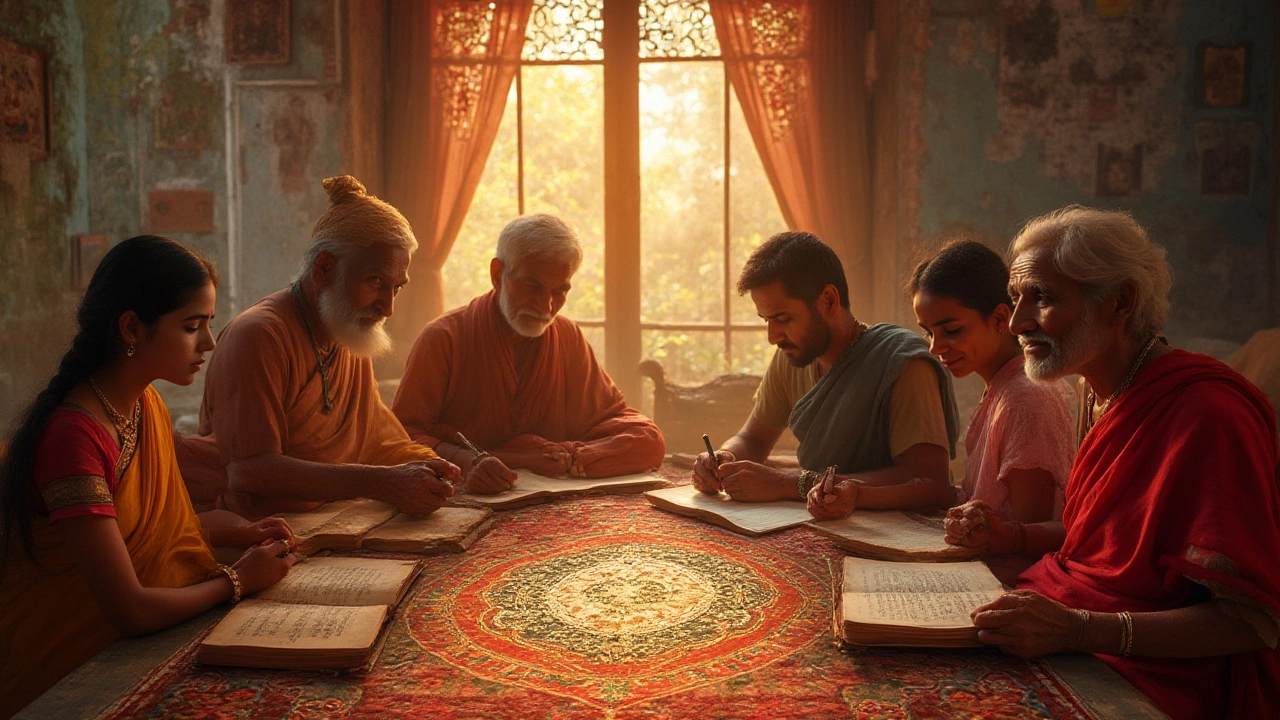
Do Hindus Have a Bible? Understanding Hindu Sacred Texts and Scriptures
Explore whether Hindus have a Bible, how Hindu scriptures are structured, and what texts shape the religion, beliefs, and daily life for millions.
When people say Hindu Bible, a misleading term used to describe the collection of sacred texts in Hinduism. Also known as Hindu scriptures, it Vedas, Upanishads, and the Bhagavad Gita—not one book, but many, written over thousands of years. There’s no single text that all Hindus follow the way Christians follow the Bible. That’s because Hinduism isn’t built on one revelation. It’s a living, breathing tradition shaped by philosophy, ritual, regional practice, and centuries of debate.
Think of it like a library instead of a lawbook. The Vedas, the oldest Hindu texts, composed in Sanskrit and passed down orally before being written are considered revealed knowledge—heard by ancient sages, not written by humans. Then come the Upanishads, philosophical commentaries that explore the nature of the self and the universe. These aren’t commandments. They’re questions. What is real? Who am I? What happens after death? The Bhagavad Gita, a dialogue between Prince Arjuna and the god Krishna, set on a battlefield, is maybe the most widely read part today. It’s not a rulebook. It’s a guide to living with purpose, even when everything feels chaotic.
People call it the Hindu Bible because they’re trying to make sense of it through their own cultural lens. But that’s like calling a jazz album a pop song—it’s not wrong, but it misses the point. Hinduism doesn’t demand blind faith in one text. It invites study, debate, and personal experience. Some families focus on the Ramayana. Others chant the Lalita Sahasranama. In Tamil Nadu, the Tevaram hymns are as sacred as the Gita. In Bengal, the Devi Mahatmyam is central. The diversity isn’t a flaw—it’s the point.
And that’s why searching for a "Hindu Bible" leads to confusion. You won’t find one. But if you want to understand what Hindus actually believe and practice, you’ll find dozens of texts, each offering a different path. Below, you’ll see articles that break down these texts, explain why they matter, and clear up common myths—like thinking Krishna is just a god of love, or that the Vedas are outdated. These aren’t just ancient stories. They’re living traditions that shape how millions live today.
Explore whether Hindus have a Bible, how Hindu scriptures are structured, and what texts shape the religion, beliefs, and daily life for millions.