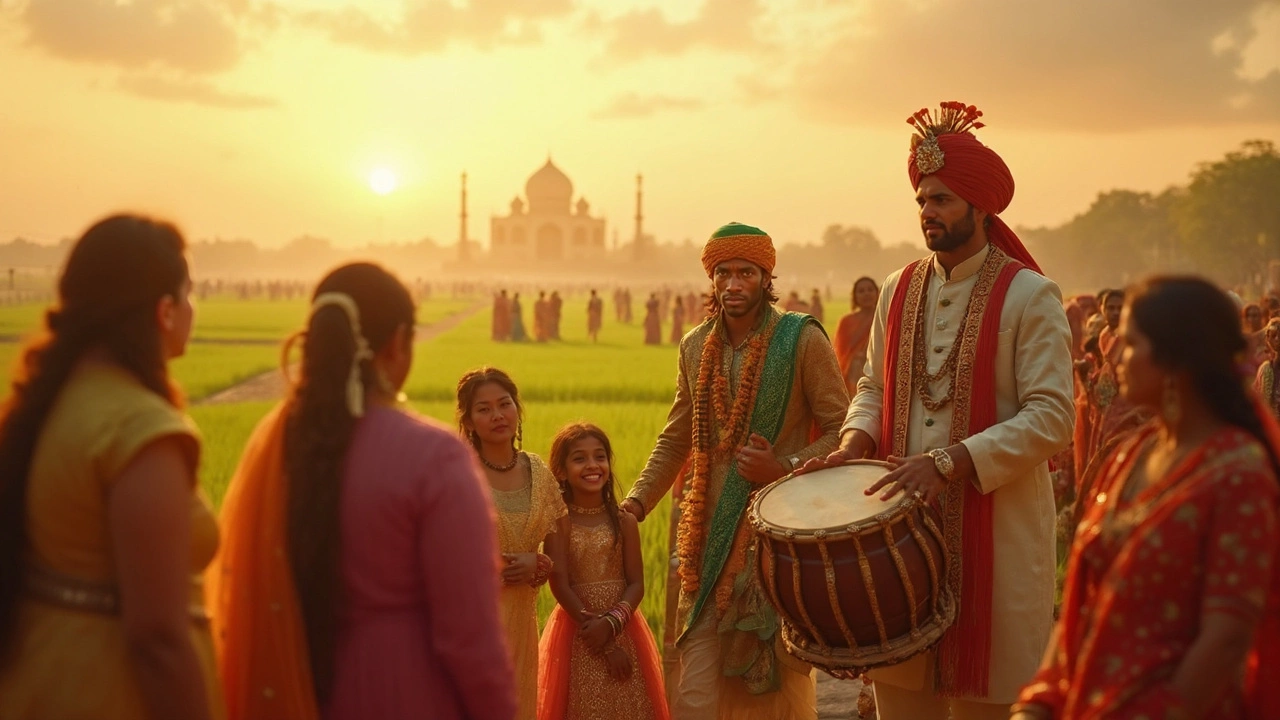
Folk Songs: The Heartbeat of Tamil Village Life
When you hear a folk song, a traditional, orally passed-down melody tied to daily life, community events, or spiritual practices. Also known as village music, it's not performed on stages—it’s sung while working, walking home, or rocking a baby to sleep. In Tamil Nadu, these songs aren’t fancy. They’re raw. They carry the weight of a mother’s lullaby, the rhythm of a rice-threshing beat, or the call-and-response of fishermen hauling nets. Unlike classical Carnatic music, which follows strict ragas and is taught in gurukuls, folk songs are learned by ear, passed from aunt to niece, father to son, with no sheet music needed.
One of the most distinctive forms is bol banao, a type of nonsense singing using rhythmic syllables like "dha dhi dha" or "tak tak" to mimic instruments and emotions. Also called solfa syllables, it’s not random noise—it’s emotional code. Farmers use it to keep time while plowing. Women sing it during monsoon festivals to ward off bad luck. Even today, you’ll hear it in villages near Madurai or Kanyakumari, where elders still teach kids to clap along before they can speak full sentences. These songs connect to deeper traditions like Karakattam, a dance performed with pots balanced on the head, often accompanied by call-and-response singing. Also known as pot dance, it’s not just performance—it’s devotion. The songs that accompany it praise local deities, thank the earth, or ask for rain. They’re not written down. They live in the voices of those who’ve sung them for centuries. You won’t find these songs on Spotify playlists. But you’ll find them in temple courtyards during Pongal, at village weddings where the bride’s aunt sings a teasing tune to her, or in the chants of women washing clothes by the river.
What makes Tamil folk songs different from Punjabi bhangra or Bengali baul? It’s the language, the rhythm, and the silence between notes. There’s no grand orchestra. Just a drum, a flute, maybe a handclap. The power isn’t in volume—it’s in repetition, in the way a single line echoes across fields until everyone joins in. These songs don’t just entertain. They teach. They remind. They heal. And they’re disappearing—not because people don’t care, but because the rhythms of modern life don’t leave room for them anymore.
What you’ll find in the posts below are real stories from the ground: the songs that still echo in Tamil Nadu’s backroads, the singers who keep them alive, and the misunderstandings that confuse them with other Indian traditions. You’ll learn why a nonsense chant isn’t nonsense at all, how Diwali is sung about in Tamil villages differently than in the north, and why some folk songs have survived for 300 years without ever being recorded. This isn’t history class. This is listening to the living voice of a culture that refuses to be silenced.