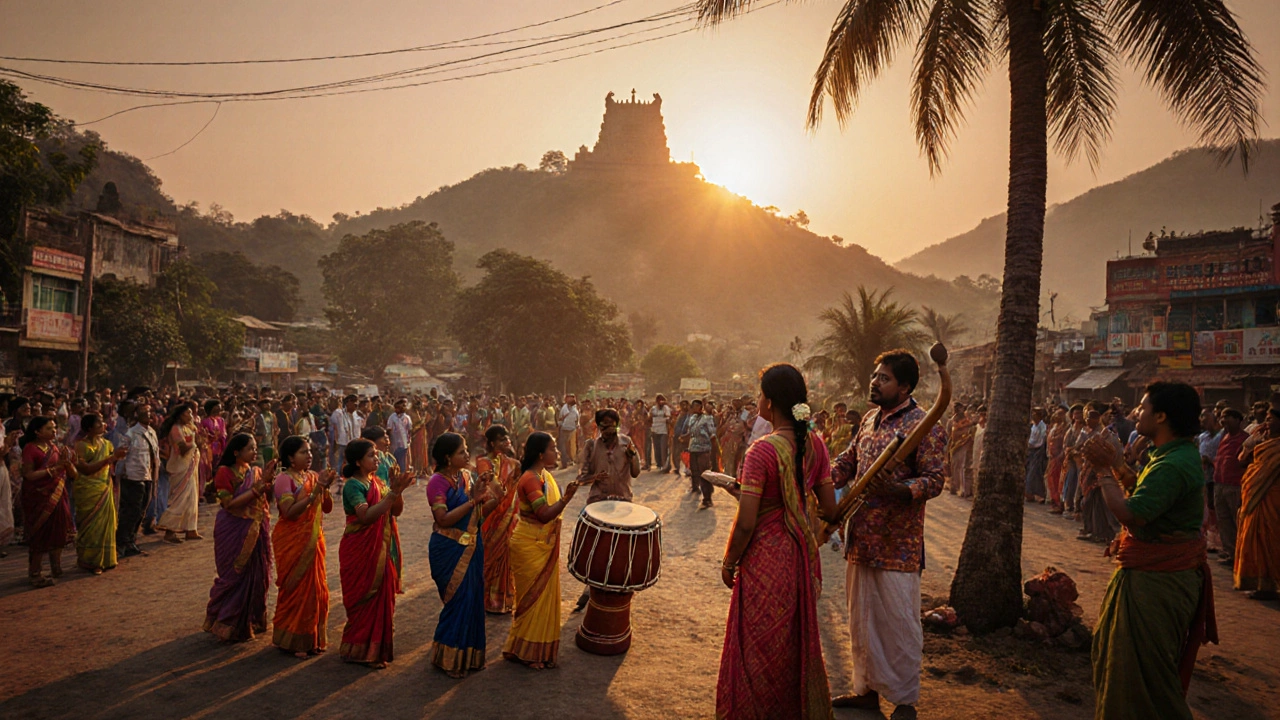
What Is Tamil Folklore? A Deep Dive into Tamil Nadu’s Folk Traditions
Explore Tamil folklore's myths, music, dance, and rituals. Learn about Karakattam, Puliyattam, Theru Koothu, and how Tamil Nadu preserves its vibrant folk heritage.
When you think of Folk Art Tamil Nadu, a rich, hands-on expression of rural Tamil life passed down through generations. Also known as Tamil folk crafts, it’s not just decoration—it’s ritual, memory, and identity stitched into every stroke, weave, and carving. This isn’t museum art. It’s the kolam drawn at dawn by grandmothers, the wooden puppets that tell ancient epics in village squares, the clay toys shaped by hand in Kumbakonam workshops. These aren’t souvenirs. They’re alive.
Folk Art Tamil Nadu includes Kolam, intricate rice-flour designs that mark thresholds and invite prosperity, a daily practice tied to time, season, and spirit. Then there’s Tholu Bommalata, shadow puppetry using leather figures that dance to tales from the Ramayana, performed in temple courtyards with drumbeats echoing for hours. And let’s not forget Kondapalli toys, brightly painted wooden figures made from softwood, often depicting gods, animals, and village life—a craft that survived modernization because families kept teaching it to their kids. These aren’t isolated traditions. They’re connected: the same motifs in kolam show up on temple walls, on handwoven sarees, and on the faces of clay dolls.
What makes Folk Art Tamil Nadu different from other Indian folk styles? It’s the deep link to daily worship and agricultural cycles. A kolam isn’t just pretty—it’s an offering. A puppet show isn’t entertainment—it’s a prayer. A toy isn’t for play—it’s a blessing. These arts don’t need galleries. They thrive in homes, fields, and temple steps. You won’t find them in glossy catalogs. You’ll find them in the hands of women who wake before sunrise, in the fingers of elders who carve while telling stories, in the laughter of children who learn by copying.
There’s no school for this. No degree. Just repetition, patience, and pride. And that’s why it’s vanishing—because the world doesn’t pay enough for silence, for slow hands, for tradition without a brand. But it’s still here. In villages near Madurai. In coastal towns near Kanyakumari. In the corners of Chennai homes where someone still draws a kolam every morning, just like their mother did.
What follows are stories that bring these arts to life—the people behind them, the meanings hidden in patterns, and how they’re being kept alive today. You’ll meet artisans who refuse to quit, see how ancient symbols still speak, and understand why these crafts matter more now than ever.
Explore Tamil folklore's myths, music, dance, and rituals. Learn about Karakattam, Puliyattam, Theru Koothu, and how Tamil Nadu preserves its vibrant folk heritage.