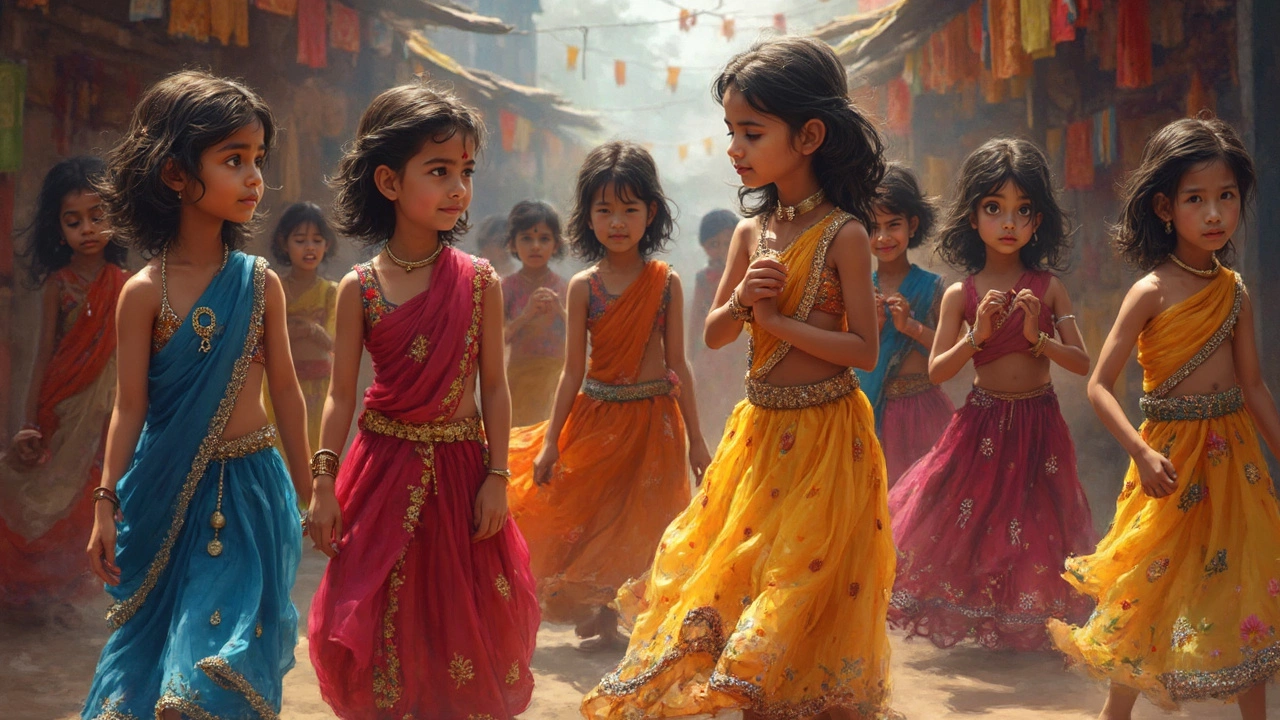
Cultural Attire India: Traditional Clothing Across Tamil and Regional Communities
When you think of cultural attire India, the diverse traditional garments worn across India’s states that reflect local identity, religion, and history. Also known as ethnic wear, it’s not just fabric—it’s a story stitched into every thread. In Tamil Nadu, women wear the Kanjivaram silk saree, heavy with gold zari and passed down through generations. Men often drape the veshti, a simple yet elegant dhoti tied with precision. These aren’t costumes for show—they’re daily expressions of belonging, worn at temple visits, weddings, and even grocery runs.
But cultural attire in India doesn’t stop at Tamil Nadu. In Punjab, women glow in bright phulkari dupattas, while men wear kurta-pajamas with turbans that signal community and pride. In the northeast, Mizo shawls tell clan histories through woven patterns. Even in cities, you’ll see young professionals blending traditional blouses with jeans, proving these styles aren’t stuck in the past—they’re evolving. The Tamil traditional clothing, the distinctive garments worn by Tamil communities in South India, especially during religious and seasonal events shares roots with other South Indian styles but has its own rhythm—like the way the pallu of a saree is pinned differently in Madurai than in Kanchipuram. Meanwhile, the Indian festival dress, the special garments worn during religious celebrations like Diwali, Navratri, or Pongal, often more ornate than everyday wear turns every celebration into a parade of color, embroidery, and meaning. Diwali doesn’t just light lamps—it lights up new silk sarees, new dhotis, and new jewelry that’s been saved for months.
What makes Indian cultural attire powerful isn’t just how it looks, but why it’s worn. A woman in a Banarasi silk isn’t just dressed up—she’s honoring her grandmother’s hands that wove it. A man in a Madurai-style veshti isn’t being traditional—he’s carrying forward a ritual older than most modern cities. Even the way fabric is draped varies by region: the Nivi style in Andhra, the Bengali style in West Bengal, the Madisar in Tamil Brahmin communities—all different ways to wear the same basic piece. These choices aren’t random. They’re coded with meaning, tied to caste, climate, and ceremony. And yes, even the color matters. Red for weddings, white for mourning, gold for prosperity. You don’t just pick an outfit—you choose a message.
What you’ll find in the posts below isn’t just a list of clothes. It’s a look at how identity is stitched into fabric—from the silk of Tamil Nadu to the cotton of Rajasthan, from the everyday to the sacred. You’ll see how Diwali traditions shape what people wear, how folk dances like Karakattam demand specific attire, and why some garments survive while others fade. This isn’t fashion history. It’s living culture, worn by real people every single day.