What to Wear for an Ayurvedic Massage: Abhyanga, Shirodhara, Panchakarma Guide
Worried about what to wear to an Ayurvedic massage? See exactly what to keep on, what to pack, and how draping works for Abhyanga, Shirodhara, and more.
When you think of ayurvedic massage, a traditional Indian healing practice that combines oil, touch, and rhythm to balance the body’s doshas. It’s not just about the oils or the pressure—it’s about the whole experience, including what you wear. Unlike a typical spa session where you might slip into a robe, ayurvedic massage follows ancient guidelines that connect clothing, comfort, and energy flow. The right attire isn’t about fashion—it’s about allowing the body to absorb warmth, oils, and healing energy without restriction.
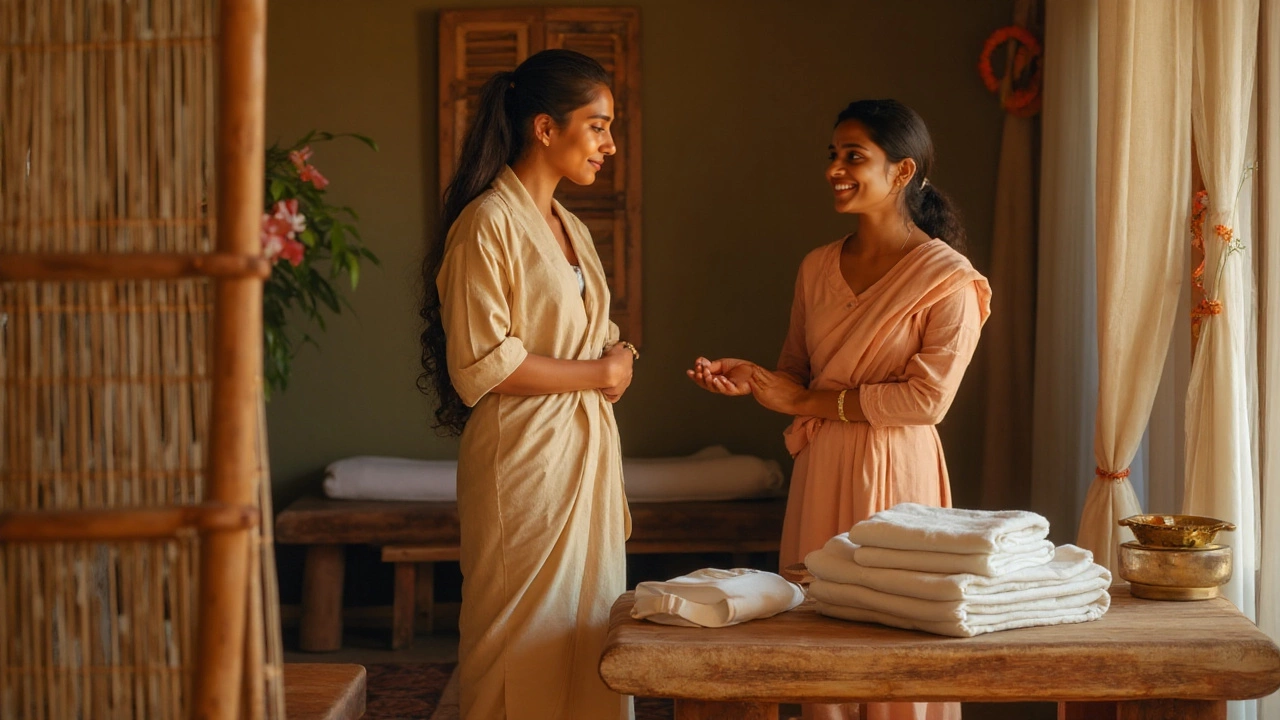
Most practitioners recommend wearing loose, natural-fiber clothes like cotton or silk—materials that breathe and don’t trap heat. Synthetic fabrics? They can interfere with the skin’s ability to absorb herbal oils, which are central to the treatment. You’ll often see clients in simple cotton dhotis or tunics, especially in South India, where the practice is rooted. Women may wear a long cotton skirt and top; men might wear loose shorts or traditional mundu. The goal is to keep the body uncovered enough for the therapist to work on key points—like marma points, the body’s energy centers—but still modest enough to honor cultural norms.
Some centers provide disposable underwear or wraps, but many prefer you bring your own clean, old cotton clothes—because oils stain. Don’t worry about looking perfect. This isn’t a runway. It’s a healing space. What matters is that your clothes don’t constrict movement, don’t cause irritation, and let the warmth of the oils sink in. The therapist will drape you with towels or cloth as needed, but your base layer should support, not hinder, the process.
It’s also worth noting that Ayurveda, a 5,000-year-old system of holistic health from India that focuses on balance between body, mind, and spirit doesn’t treat massage as just physical. It’s tied to rituals, timing, and even the environment. Wearing the right clothes is part of preparing your energy for healing. In rural Tamil Nadu or Kerala, people still dress simply for these sessions—no jewelry, no tight waistbands, no perfumes. It’s about removing distractions so the body can respond fully.
And if you’re new to this? Don’t overthink it. Bring a loose cotton t-shirt and shorts. That’s all you need. The therapist will guide you. What you wear affects how deeply the oils penetrate, how well your muscles relax, and even how long the benefits last. It’s not a detail—it’s a key part of the treatment.
There’s no one-size-fits-all rule, but there are clear patterns across India: simplicity, breathability, and respect for tradition. Whether you’re getting a shirodhara, abhyanga, or pizhichil, your clothes are part of the medicine. The post collection below dives into real experiences, cultural tips, and practical advice from people who’ve been through it—so you know exactly what to expect, what to pack, and what to avoid.
Worried about what to wear to an Ayurvedic massage? See exactly what to keep on, what to pack, and how draping works for Abhyanga, Shirodhara, and more.