Indian Cultural Heritage Explorer
Discover the Tapestry of India
India's heritage is not a monolith but a mosaic. Select a category below to explore specific details about its rich traditions.
Ask anyone if India has a rich cultural heritage, and you might get a nod so vigorous it could cause whiplash. But why is that assumption so universal? It isn’t just marketing fluff or tourist brochures talking up the 'exotic East.' The reality is that India’s cultural fabric is woven from threads that are thousands of years old, incredibly diverse, and still vibrant today. When we talk about Indian culture, we aren’t discussing a single monolith. We are looking at a continent-sized tapestry where languages, religions, cuisines, and art forms change as quickly as you cross a state border.
If you’ve ever tried to pin down exactly what 'Indian culture' means, you’ve probably hit a wall. That’s because it defies simple definition. From the snow-capped peaks of Kashmir to the tropical shores of Kerala, every region has its own distinct identity. This article breaks down why India’s heritage is considered one of the richest on the planet, moving beyond stereotypes to look at the tangible and intangible assets that define this ancient land.
The Mosaic of Languages and Literature
One of the first things you notice when traveling across India is the sound. It is a cacophony of tongues. India is home to over 780 living languages, according to the Ethnologue database. To put that in perspective, that’s more than half of the world’s total number of living languages spoken within one country’s borders.
This linguistic diversity isn’t just about communication; it’s a vessel for history. Each language carries its own literary tradition. Take Sanskrit, for instance. Often called the 'mother of all languages' in the Indian context, Sanskrit is one of the oldest Indo-European languages. Its grammar, codified by the scholar Panini around the 4th century BCE, is so precise that some modern computer scientists have drawn parallels between Sanskrit syntax and programming logic. Then there are Dravidian languages like Tamil, which boasts a literary history spanning over two millennia. The Sangam literature from Tamil Nadu dates back to 300 BCE, offering insights into daily life, love, and war that feel surprisingly contemporary.
But it’s not just the ancient texts. Modern Indian literature is a powerhouse. Writers like Rabindranath Tagore, who became the first non-European to win the Nobel Prize in Literature in 1913, blended Bengali traditions with global humanism. Today, authors like Arundhati Roy and Amitav Ghosh continue to shape global narratives, proving that Indian storytelling is not stuck in the past but is actively evolving.
Architectural Wonders: Stone and Spirit
You can read about history, but you can also walk through it. India’s architectural heritage is a physical manifestation of its spiritual and political evolution. The country hosts 42 UNESCO World Heritage Sites, ranging from massive fortresses to delicate cave temples.
Consider the Taj Mahal in Agra. Everyone knows it, but do you know what it represents? It’s not just a tomb; it’s a masterpiece of Mughal architecture, blending Persian, Islamic, and Indian styles. The white marble changes color with the light of the day, symbolizing the different emotions of love. Then look north to the Red Fort in Delhi, built by Emperor Shah Jahan, which showcases the grandeur of imperial power with its red sandstone walls and intricate gardens.
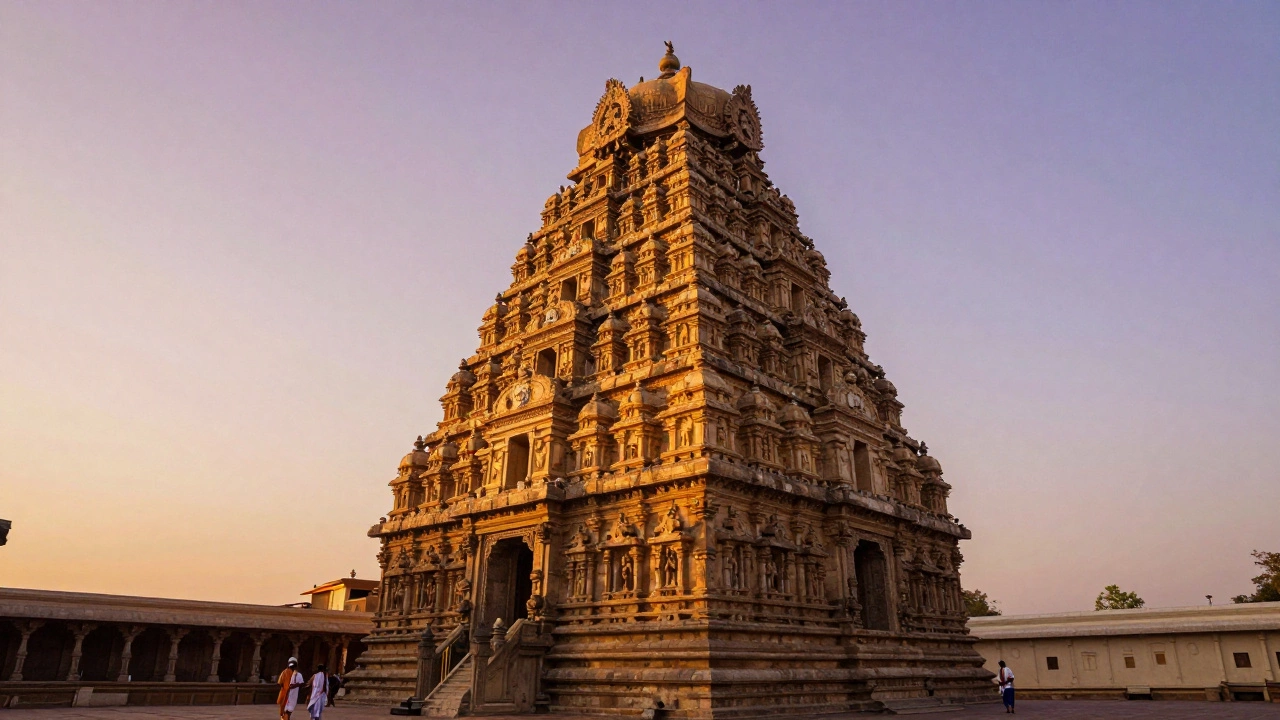
Move further south, and the style shifts dramatically. The Brihadeeswarar Temple in Thanjavur, built by the Chola dynasty in the 11th century, is a marvel of Dravidian architecture. The temple’s vimana (tower) is made of granite blocks stacked without mortar. How did they lift a 80-tonne capstone to the top of a 66-meter tower using only medieval technology? Engineers and historians still debate the methods, but the result stands as a testament to ancient engineering prowess.
Then there are the Ajanta and Ellora Caves in Maharashtra. These aren’t just holes in the rock; they are open-air museums. Carved out of volcanic rock between the 2nd century BCE and the 10th century CE, these caves house Buddhist, Hindu, and Jain monuments side by side. The fact that three different religions co-existed in their artistic expression during those centuries speaks volumes about the syncretic nature of Indian heritage.
Performing Arts: The Rhythm of Life
In India, art isn’t something you visit in a gallery; it’s something you participate in. Music and dance are deeply embedded in religious and social rituals. Indian classical music is divided into two main traditions: Hindustani in the north and Carnatic in the south. Both systems rely on ragas (melodic frameworks) and talas (rhythmic cycles). Unlike Western music, which often focuses on harmony, Indian classical music emphasizes melody and improvisation. A raga is not just a scale; it’s an emotional mood meant to be performed at specific times of the day or seasons. Playing a morning raga at night is considered incorrect because the atmosphere doesn’t match the intended emotion.
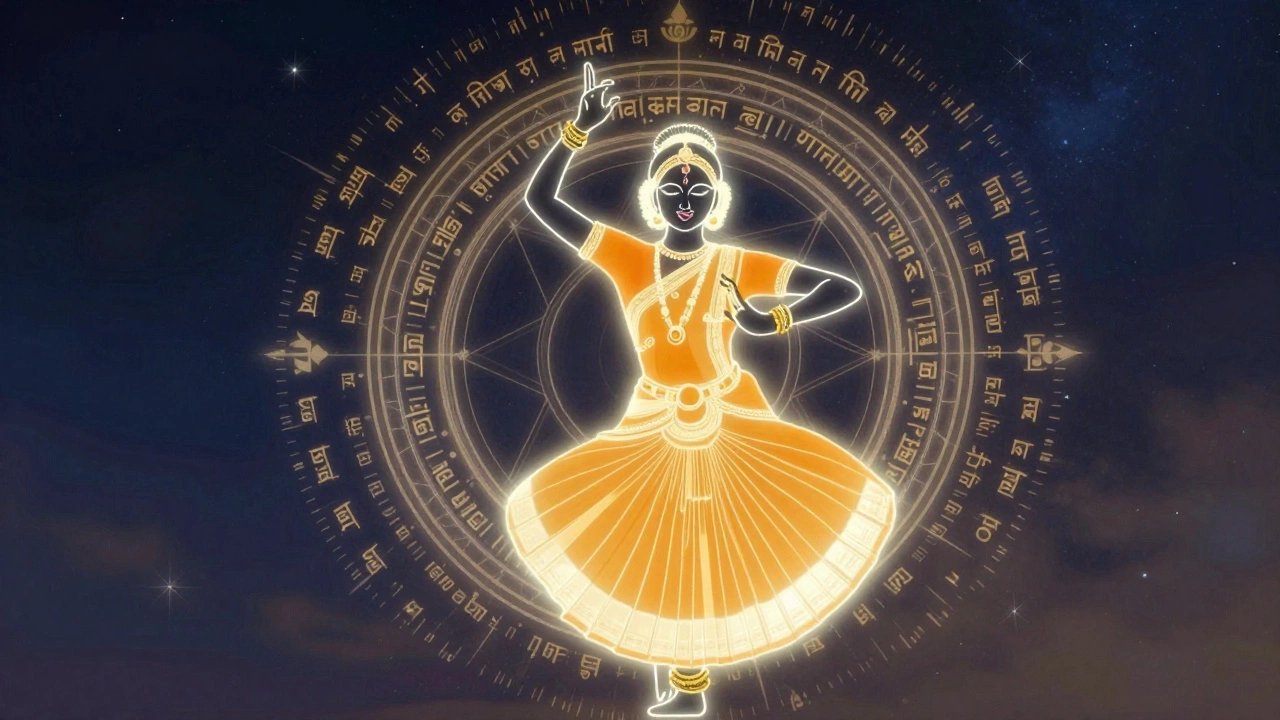
Dance tells a similar story. Bharatanatyam, originating from Tamil Nadu, uses mudras (hand gestures) and facial expressions to narrate stories from mythology. Kathak, popular in the north, incorporates spins and footwork that mimic the rhythm of drums. These aren’t just performances; they are oral histories passed down through gurus (teachers) and shishyas (students) for generations. The government of India recognizes eight major classical dance forms, each with its own regional flavor and historical lineage.
Festivals: A Calendar Full of Color
If you want to understand the heartbeat of Indian culture, watch the festivals. India celebrates more holidays than almost any other nation, reflecting its pluralistic society. Diwali, the Festival of Lights, is celebrated by Hindus, Jains, Sikhs, and some Buddhists. It symbolizes the victory of light over darkness and knowledge over ignorance. Families clean their homes, light oil lamps, and exchange sweets. It’s a moment of universal joy that transcends caste and creed.
Holi, the festival of colors, is another spectacle. People throw colored powders and water at each other, breaking down social barriers. For one day, status symbols disappear under a layer of pink and green. In the northeast, Pongal and Bihu celebrate the harvest, thanking nature for its bounty. Eid and Christmas are celebrated with equal fervor by Muslim and Christian communities, respectively. This calendar of celebrations ensures that there is always a reason to gather, eat, and celebrate together.
Cuisine: A Map of Flavors
Food is perhaps the most accessible entry point into Indian culture. To say Indians eat 'curry' is like saying Americans eat 'meat.' It’s a gross oversimplification. Indian cuisine varies wildly by region. In the north, wheat is king, leading to dishes like naan and roti, paired with rich, creamy gravies made with dairy. In the south, rice is the staple, accompanied by tangy tamarind-based curries and fermented foods like idli and dosa.
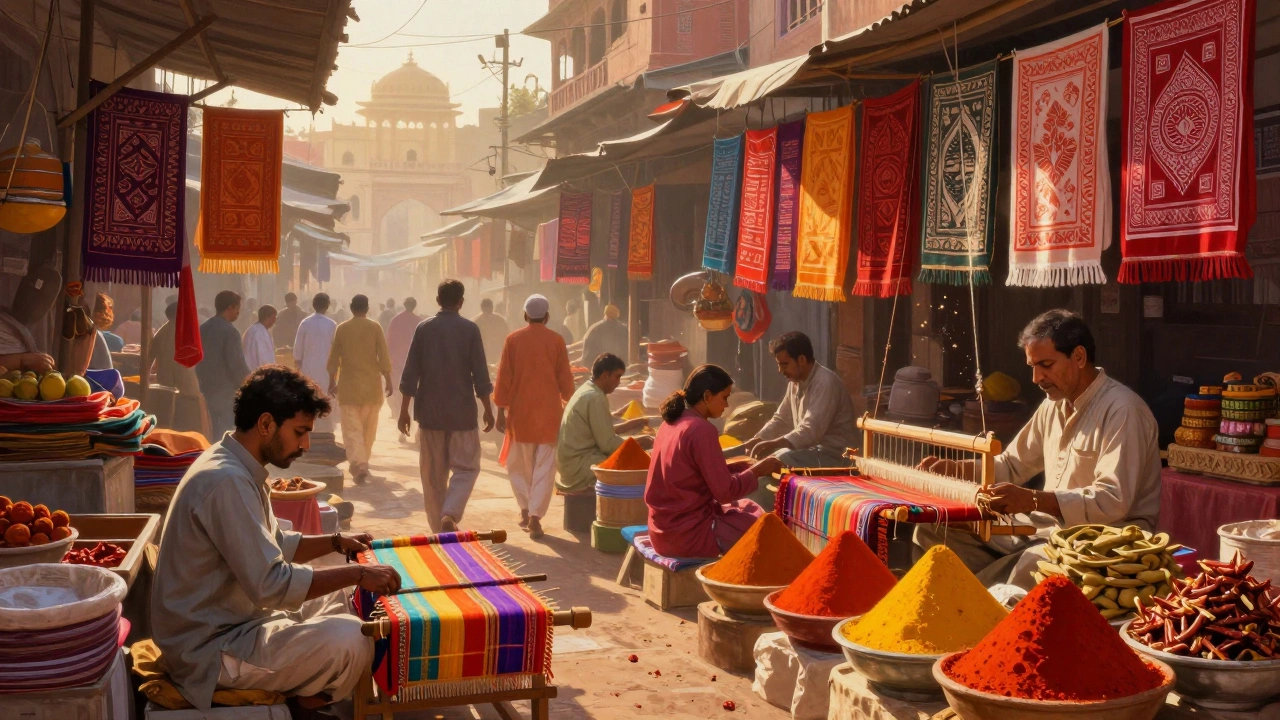
Spices are the soul of Indian cooking. Black pepper, cardamom, cinnamon, and cloves were once worth more than gold, driving European exploration. Today, households still use fresh spices ground in stone mortars. The Ayurvedic principle of balancing six tastes-sweet, sour, salty, bitter, pungent, and astringent-in every meal influences how food is prepared. It’s not just about taste; it’s about health and balance.
Spirituality and Philosophy
India is often called the birthplace of four major world religions: Hinduism, Buddhism, Jainism, and Sikhism. These faiths have shaped not just religious practices but also ethical frameworks, art, and social structures. Hinduism, with its vast pantheon of deities and philosophical texts like the Vedas and Upanishads, offers a complex worldview that encompasses everything from ritual worship to abstract metaphysics.
Buddhism, founded by Siddhartha Gautama (the Buddha) in the 5th century BCE, spread from India to much of Asia. Its emphasis on mindfulness and compassion has seen a resurgence globally in recent decades. Jainism, known for its strict adherence to non-violence (ahimsa), has influenced Indian dietary habits and environmental ethics. Sikhism, founded in the Punjab region in the 15th century, preaches equality and service, exemplified by the langar (community kitchen) at Gurdwaras, where free meals are served to anyone regardless of background.
Intangible Heritage: Skills and Traditions
Beyond the visible landmarks and festivals, India possesses a wealth of intangible cultural heritage. This includes traditional crafts, oral traditions, and performing arts that are passed down orally or through apprenticeship. Block printing in Rajasthan, pottery in West Bengal, and silk weaving in Karnataka are skills that require years to master.
The United Nations Educational, Scientific and Cultural Organization (UNESCO) has recognized several Indian elements on its Representative List of the Intangible Cultural Heritage of Humanity. Yoga, for example, is not just exercise; it’s a holistic system of physical, mental, and spiritual practices originating in ancient India. Kutiyattam, a traditional theater form from Kerala, combines Sanskrit drama with local performance techniques, surviving for over 2,000 years.
| Aspect | Description | Significance |
|---|---|---|
| Languages | Over 780 living languages | Preserves diverse histories and literatures |
| Architecture | 42 UNESCO World Heritage Sites | Reflects spiritual and imperial history |
| Music & Dance | Hindustani/Carnatic music, 8 classical dances | Oral traditions and emotional expression |
| Festivals | Diwali, Holi, Eid, Christmas, etc. | Reinforces social cohesion and diversity |
| Cuisine | Regional variations in staples and spices | Connects food to health and geography |
Challenges to Preservation
Despite its richness, Indian cultural heritage faces significant challenges. Urbanization threatens historic sites and traditional livelihoods. Globalization brings homogenization, where local crafts struggle against mass-produced goods. Younger generations, drawn to modern careers, may not pursue traditional arts or learn ancestral languages.
However, there is a growing movement to preserve and revive these traditions. Digital archives are documenting oral histories. Social media platforms are helping artisans reach global markets. Government initiatives aim to protect heritage sites and promote cultural tourism. The key lies in balancing modernity with tradition, ensuring that progress does not erase the past.
Is Indian culture homogeneous?
No, Indian culture is highly heterogeneous. With multiple languages, religions, and regional customs, it is more accurate to describe it as a collection of diverse cultures united by shared historical experiences and geographic proximity.
How many UNESCO World Heritage Sites does India have?
As of 2026, India has 42 UNESCO World Heritage Sites, including both cultural and natural sites. This places it among the countries with the highest number of such designations globally.
What is the significance of yoga in Indian heritage?
Yoga is an ancient practice originating in India that integrates physical postures, breathing techniques, and meditation. It was inscribed on UNESCO's Representative List of the Intangible Cultural Heritage of Humanity in 2016, recognizing its role in promoting well-being and mindfulness.
How does Indian cuisine vary by region?
Indian cuisine varies significantly by region due to differences in climate, agriculture, and cultural influences. Northern cuisine often features wheat-based breads and dairy-rich dishes, while Southern cuisine relies heavily on rice, coconut, and tamarind. Eastern and Western regions have their own distinct spice profiles and cooking methods.
Are traditional Indian crafts still practiced today?
Yes, many traditional Indian crafts are still practiced, though they face competition from industrial products. Artisans continue to produce block prints, textiles, pottery, and metalwork, often supported by government schemes and NGOs aimed at preserving these skills.